Governing Body Members (2025-Present)
The current DHARTI Governing Body consists of 12 members, elected at the conclusion of the 2022 and 2024 biennial conferences. Bringing together scholars and practitioners from institutions across India and abroad, the body includes five office bearers and seven Governing Body Members who collectively guide DHARTI’s academic and organisational activities.
Click on the following item-labels in order to expand/collapse them.
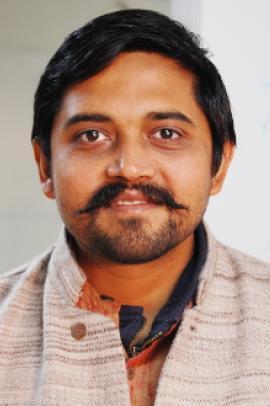
Dr. Arjun Ghosh
President, DHARTI (2022-Present)
Executive Body Member, DHARTI (2018-2022)
Professor, IIT Delhi
Dr. Arjun Ghosh is a Professor at IIT Delhi whose research interests include Digital Humanities, Performance Studies, and Technology in Society. He was formerly a Fellow at the Indian Institute of Advanced Study, Shimla, and is the author of A History of the Jana Natya Manch: Plays for the People and Freedom from Profit: Eschewing Copyright in Resistance Art, as well as an annotated translation of Bijon Bhattacharya’s Nabanna with a critical introduction. His wider research interests include Performance and Theatre Studies, Authorship, Copyright and Intellectual Property, Political Communication, and Science and Technology Studies. He is also actively involved in Digital Humanities research and teaching at IIT Delhi, including work on digital methods, humanities data, and the development of digital tools for humanities research.
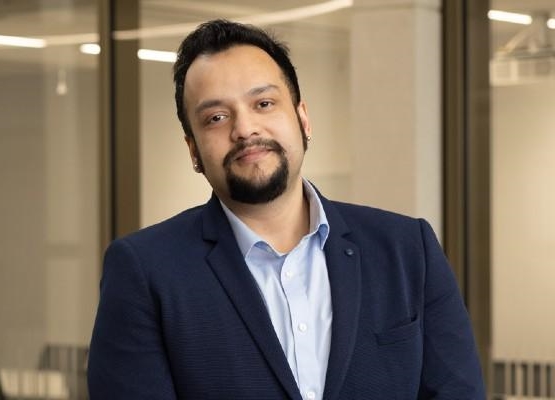
Dr. Dibyadyuti Roy
Vice-President, DHARTI (2022-Present)
Executive Body Member, DHARTI (2018-2022)
Associate Professor, University of Leeds
With the experience of being a researcher and an educator in multidisciplinary academic environments across three different continents, Dibya’s work examines and interrogates cultural narratives of/about dominant technologies, ranging from nuclear weapons to artificial intelligence, with a current focus on algorithmically-driven platforms. His core interest(s) advance data-driven research and teaching interventions, particularly in Digital Media and Culture(s), which amplify and dialogue with non-normative and minority subjectivities as well as the interconnected structural inequities of race, caste, class and gender, especially from Majority World/Global South contexts. As a representative sample his recent work has engaged with issues of Algorithmic Accountability in the Global South(s), the role of social media health promotion during Covid 19 in India, and the performances of anxious postcolonial masculinity in online spaces. His continuing work in Digital Humanities, with a specific focus on India and South Asia, can be found in the volumes on “Global Debates in the Digital Humanities”, “What We Teach When We Teach DH” (both from the University of Minnesota Press), and “Digital Humanities and Laboratories” (from Routledge), to name a few. In addition he has edited the special issue of the journal “Reviews in DH” on DH pedagogies and is the current contributing author on “Digital Humanities” for the Oxford University Press Journal, “The Year’s Work in Critical and Cultural Theory” (YWCCT). Currently Dibya is the Programme Director, of the BA in Cultural and Media Studies at the University of Leeds and he has previously been a tenured faculty member at the Indian Institute of Management (IIM) Indore as well as at the Indian Institute of Technology (IIT) Jodhpur. He is also an affiliate of the Data and Society Research Institute (USA) and a founding member of DHARTI.
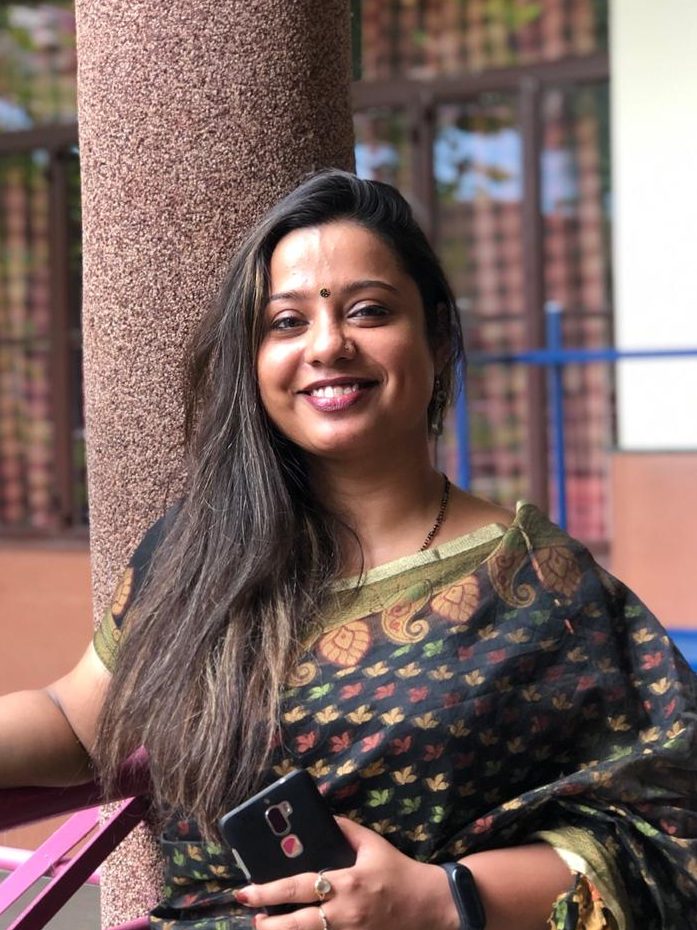
Dr. Ruchi Sharma
Treasurer, DHARTI (2022-Present)
Secretary, DHARTI (2018-2022)
Assistant Professor, Guru Nanak Dev University, Amritsar
Dr. Ruchi Sharma is an Assistant Professor in the Department of English at Guru Nanak Dev University, Amritsar, and has over a decade of experience teaching English language and literature at various universities. Her research and teaching interests span Soft Skills, Communication Skills, Body Language, Postcolonial Studies, Cultural Studies, Gender Studies, Star Studies, and Digital Humanities, with a particular interest in the impact of visual and textual literacy. Her doctoral research focuses on Indigenous writings in Aboriginal Australian literature, while her more recent work engages with Digital Humanities and its applications to teaching and literary studies. She has published research papers and book chapters in national and international publications and has presented her work at conferences and academic forums in India and abroad. She has also served as a resource person for courses and workshops on Digital Humanities and participated in the organisation of DHARTI2022, the organisation’s international conference on, “The Digital Divides: Discontents, Debates and Discussions”. Her contributions to literary studies and Digital Humanities have been recognised through awards including the Researcher of the Year Award from the IIS University and a Best Paper Award for her work on Digital Humanities.
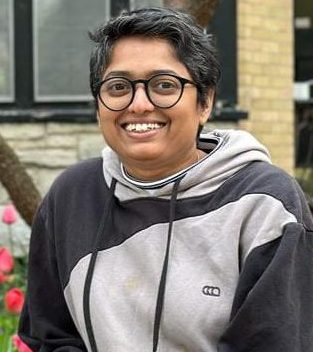
Dr. Shanmugapriya T.
Secretary, DHARTI (2022-Present)
Executive Body Member, DHARTI (2018-2022)
Assistant Professor, IIT (ISM) Dhanbad
Shanmugapriya is an Assistant Professor (Digital Humanities) in the Department of Humanities and Social Sciences, Indian Institute of Technology (Indian School of Mines) Dhanbad. She was a Postdoctoral Scholar at the Department of Historical and Cultural Studies, University of Toronto Scarborough, Canada from 2022 to 2024. She was an AHRC Postdoctoral Research Associate at Lancaster University, UK from 2020 to 2021. Shanmu was a SPARC Visiting Researcher at the Department of History, Lancaster University in 2019. Her research and teaching interests encompass an interdisciplinary approach, with a focus on digital humanities, digital environmental humanities, and digital literature. Specifically, her areas of expertise include South Asia, Colonial and Postcolonial studies, Text mining, Geographical text analysis, GIS and mapping, Interactive visualization, and Digital-born creative works. Shanmu earned her Ph.D. in Indian English Literature and Digital Humanities at Indian Institute of Technology Indore, India. She is one of the Interim Executive Committee members and Governing Body of DHARTI, and a Research Fellow and member of Electronic Literature Organization.
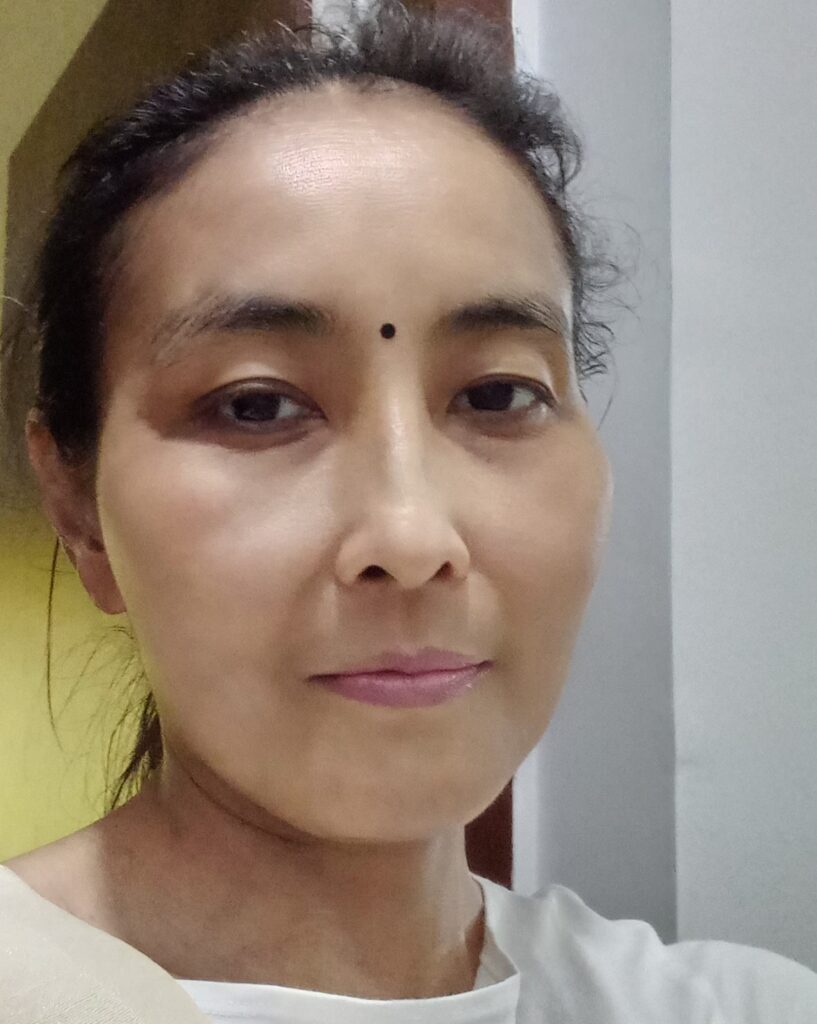
Dr. Natasa Thoudam
Joint Secretary, DHARTI (2022-Present)
Assistant Professor, IIT Jodhpur
Dr. Thoudam’s highly specialized Interdisciplinary research interests are Comics Studies, Digital Humanities, Gender Studies, Literary Studies, Performance Studies, Religious Studies, and their intersections focused on Manipur in India’s North-East. She is currently working on two book projects. Motto in Life: Live.
Saim Raza
Governing Body Member, DHARTI (2022-Present)
PhD Scholar, Aligarh Muslim University
Saim Raza is PhD Scholar at the Department of English, Aligarh Muslim University, India and has served as an Assistant Professor in GLA University, India. He has written and presented papers in the domain of Digital literature, Postcolonial literature, Media studies, and Cultural studies. He has also served as the Secretary of Raleigh Literary Society, one of the oldest literary societies in India. He has represented the university in various national and international events which includes debates and colloquiums. He has trained students in the art of debating at the prestigious Siddons Union Debating Club. He is the author of the novel, Beyond Mortality.
Dr. Samya Brata Roy
Governing Body Member, DHARTI (2022-Present)
Assistant Professor, GITAM University, Hyderabad
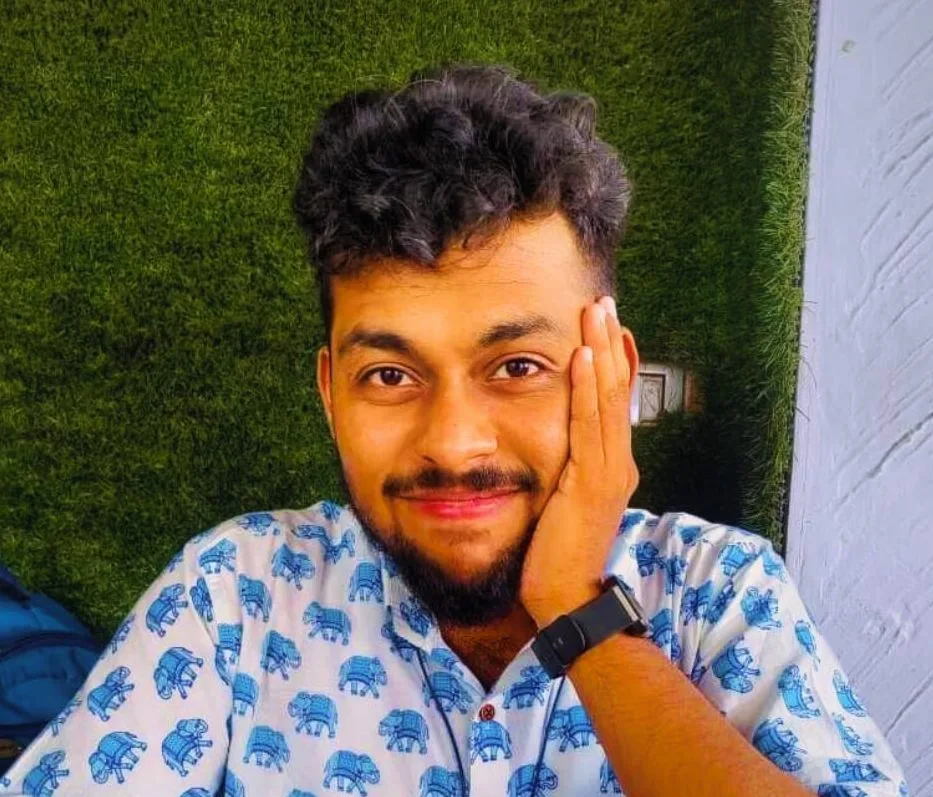
Samya Brata Roy (he/him) holds a PhD from the School of Liberal Arts, IIT Jodhpur. He is associated as a Fellow with Digital Humanities Research Hub (School of Advanced Study, University of London), Electronic Literature Organization and DAS|LAB (University of Regensburg). His interests and publications lie in and around Visual Culture, Electronic Literature, Videogame Studies and Digital Humanities. He has curated/peer-reviewed both digital/electronic art exhibits and scholarly outputs. He co-founded Electronic Literature India and his other roles include being a member of the Intersectional Inclusion Task Force with the Alliance of Digital Humanities Organisations, Technical Advisory Member with Humanities Commons, a Governing body member with Digital Humanities Alliance for Research and Teaching Innovations and a liaison with The Association for Computers and the Humanities.
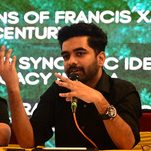
Steven S. George
Governing Body Member, DHARTI (2022-Present)
PhD Scholar, Jamia Millia Islamia, New Delhi
Steven S. George is a Ph.D. Scholar at the Department of English, Jamia Millia Islamia. He was a Visiting Scholar at the University of Witwatersrand, South Africa (2021-2022) and a Summer Fellow at Michigan State University, USA (2022). He has published research papers in reputed international journals and books.
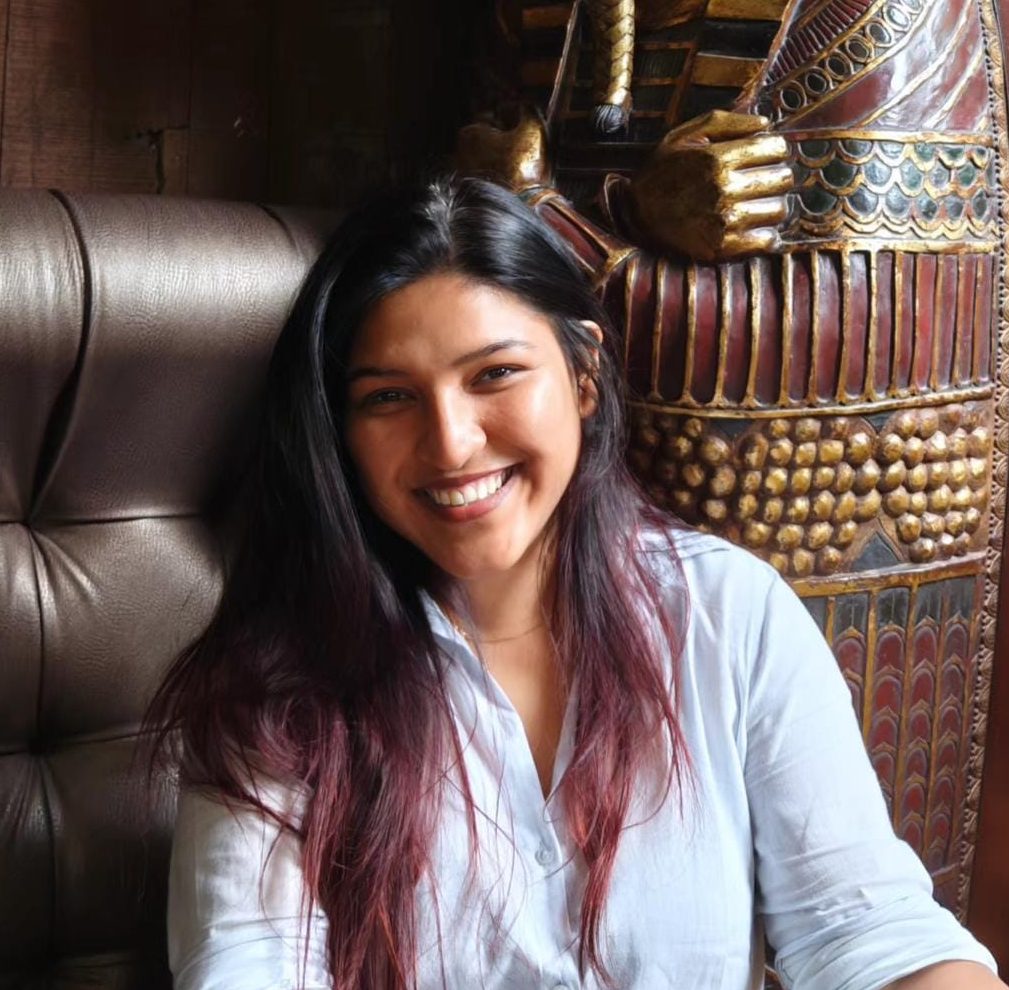
Vasundhra Dahiya
Governing Body Member, DHARTI (2022-Present)
PhD Scholar, IIT Jodhpur
Vasundhra Dahiya is a doctoral candidate in Digital Humanities at IIT Jodhpur, India. Her research domain is Critical AI, Data & Algorithm Studies. Her research sits at the intersection of data infrastructures, cross-disciplinary pedagogies, majority world scholarship, and public policy for algorithmic justice. Her doctoral research work aims to understand algorithmic accountability for AI-driven mental health therapy chatbots from sociotechnical perspective(s). She is a HASTAC (pronounced as hay-stack) scholar (2022-2024), and an active executive committee member at DHARTI since 2021. She, along with her colleagues Sharanya Ghosh, Lavanya Dahiya, and Aanya Chadha, is a joint recipient of the prestigious Paul Fortier Prize (Best Paper award) at the DH2023 annual conference of ADHO held at the University of Graz, Austria, for their work on the current Digital Humanities curricular and pedagogical trends in Indian higher education institutions. They are also the first team (and an all women team!) from the Global South to receive this award.
Dr. Soni Wadhwa
Governing Body Member, DHARTI (2022-Present)
Associate Professor, SRM University, Andhra Pradesh
Soni Wadhwa currently teaches Literature Studies at SRM University, Andhra Pradesh. She works in digital humanities projects that support her larger research area of Sindhi Studies. Three of her digital projects are active. One is PG Sindhi Library which is a digital archive of Sindhi literature published in India. Another is Sindhi Halchal Archive which is dedicated to advertisements published in Sindhi books and magazines published in India. Sindhi Sanchaya is her project devoted to collecting information about libraries and institutions that are home to Sindhi books, for which she has been collecting oral histories from custodians of different libraries and collections. Through her YouTube space @soniarchivist, she strives to disseminate perspectives on Sindhi identity. Her research publications include a study on the open movement in India, digital libraries, technology for language revitalisation, and the making of her archive.
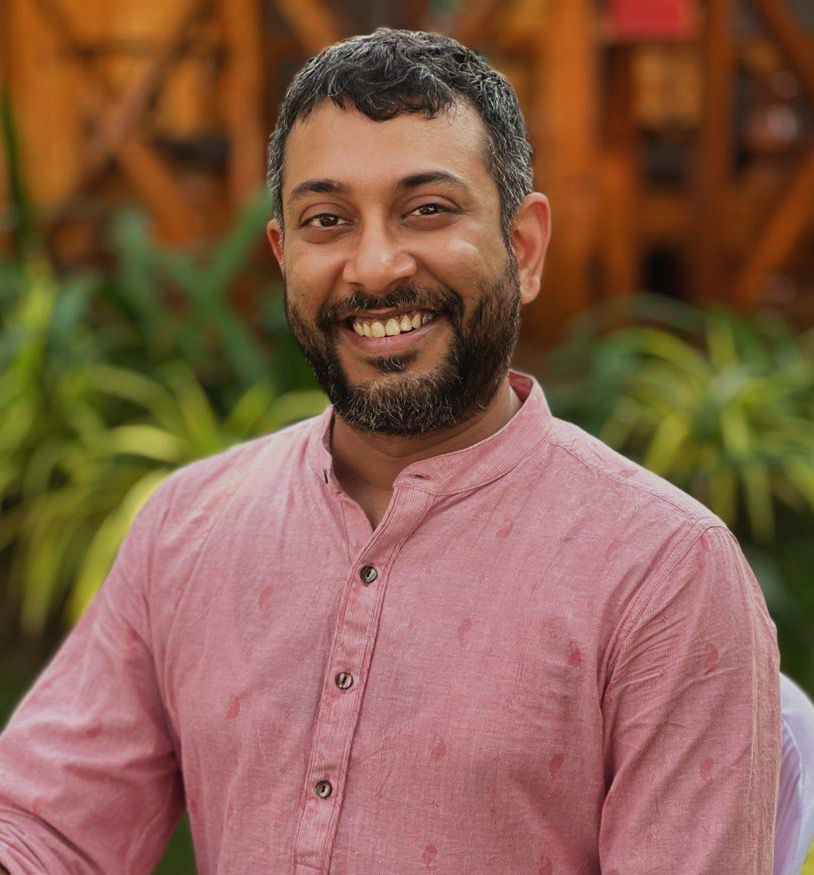
Dr. Vinayak Das Gupta
Governing Body Member, DHARTI (2025-Present)
Associate Professor, Shiv Nadar Institution of Eminence, Delhi NCR
Vinayak Das Gupta is an Associate Professor at Shiv Nadar Institute of Eminence. His work sits at the intersection of digital humanities, archival practice and cultural analytics. He has published on visual culture, digital infrastructures, literary method, and the politics of memory. He has supervised a range of interdisciplinary projects at the undergraduate and postgraduate levels. His digital work includes large-scale text collation, public memory archives, and collaborative history projects. He is also the creator of anvay, a web-based platform for topic modelling Bengali texts. His current research focuses on memory projects, curation, cultures of technology, and digital infrastructures for the humanities.
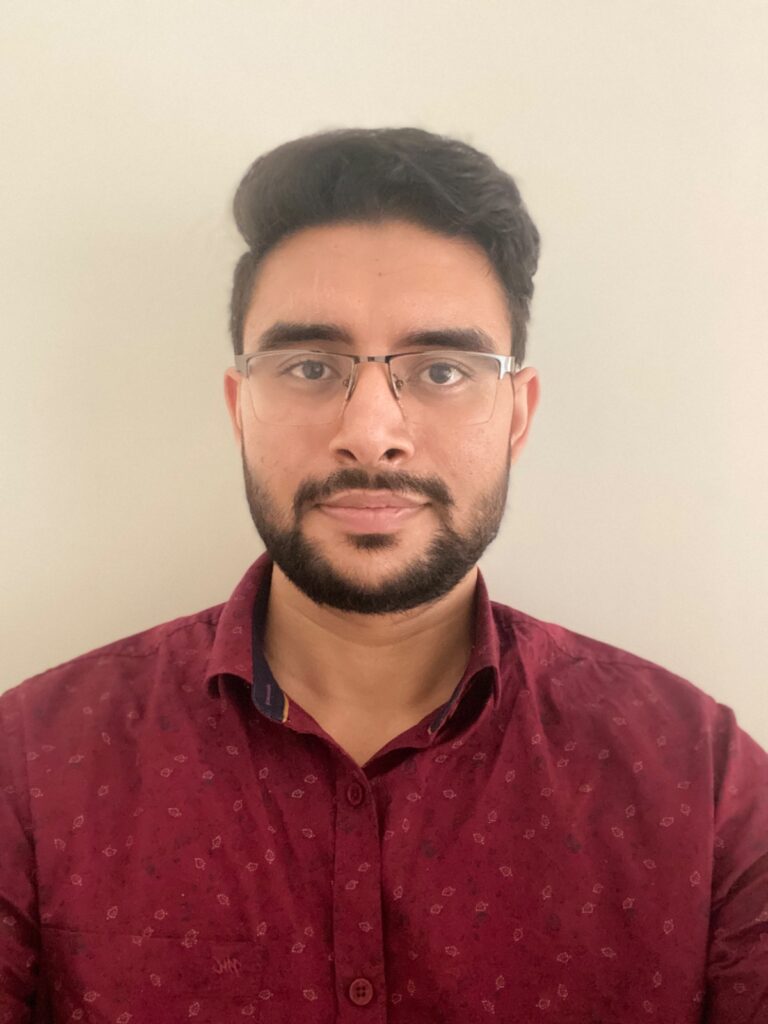
Himanshu Sihag
Governing Body Member, DHARTI (2022-Present)
PhD Scholar, IIT Jodhpur
Himanshu Sihag is a Doctoral Fellow in Digital Humanities at IIT Jodhpur, where he is working to analyse the design, development, evaluation, and governance of language technologies via participatory and inclusive methods/frameworks. His academic background comprises Bachelors in Social Sciences and Education, a Masters in English Literature, and a PGP in Data Science & Business Analytics. His work lies at the intersection of Machine Translation, Participatory design, Digital archiving. He engages with speakers, authors, translators, and annotators of Jodhpur to explore the documentation, digitalisation, and revitalisation of Rajasthani (Marwari) language. He has presented his research work at ADHO, DARIAH, PAIRS, etc. Prior to his research career, he has taught at Chandigarh University, and also worked at Haptik Inc.
Communications Officers (July, 2026-Present)
DHARTI’s Communications Team, selected in July of 2026, comprises three members: one Communications Officer, one Deputy Communications Officer, and one Website Designer, who collectively support the organisation’s digital presence, communications, and outreach activities.
Click on the following item-labels in order to expand/collapse them.
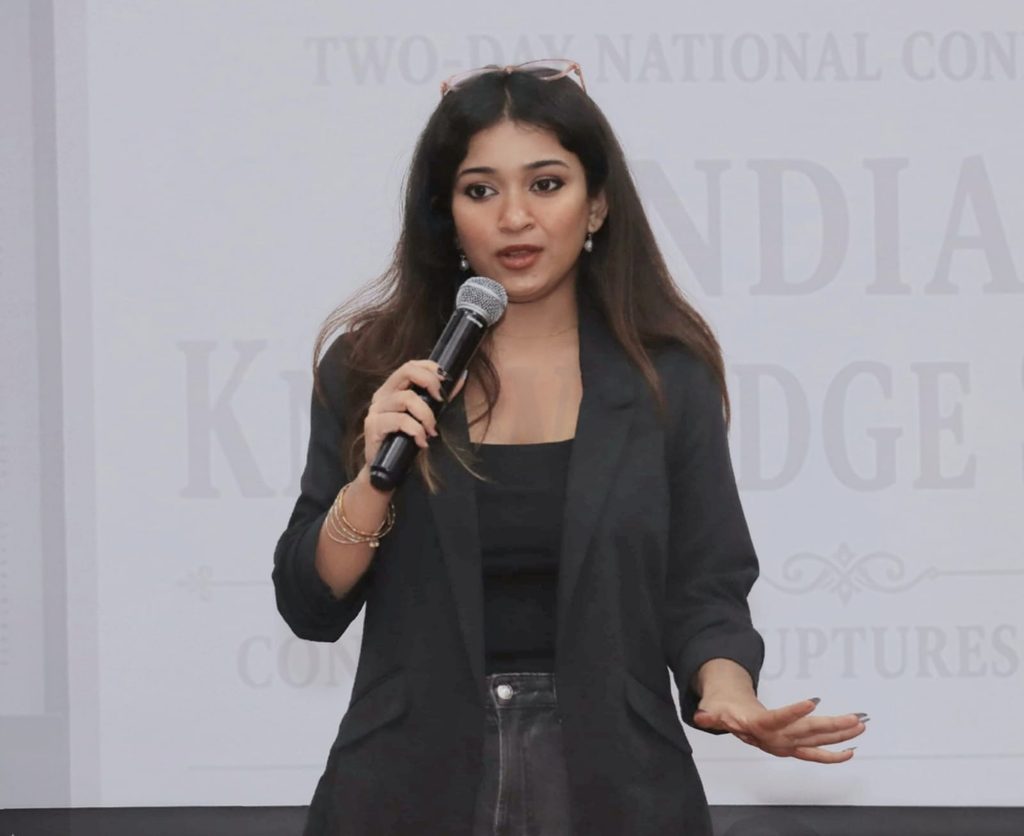
Soumyaa Somatra
Communications Officer, DHARTI (July, 2026-Present)
Soumyaa Somatra is a postgraduate researcher in Society and Culture at the Indian Institute of Technology Gandhinagar, with interdisciplinary interests spanning decolonial sociology, epistemic justice, digital cultures, and the cultural politics of knowledge. Her work examines how knowledge is produced, mediated, and legitimised across social and technological contexts, particularly in South Asia.
With a background in Sociology and Psychology, she brings together sociological inquiry, cultural analysis, and creative communication to explore emerging intersections between humanities, technology, and society. Her research and academic work engage questions of power, representation, inequality, and alternative knowledge systems.
At DHARTI, she is interested in strengthening conversations between the humanities and digital worlds, while contributing to making Digital Humanities more inclusive, accessible, and socially meaningful.
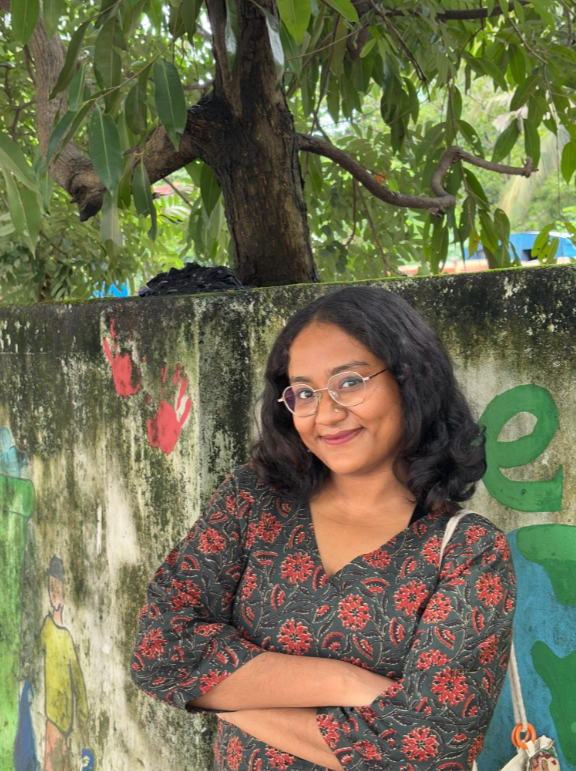
Fathima Zahra H.
Deputy Communications Officer, DHARTI (July, 2026-Present)
Zahra is an independent researcher in visual narratives, journalism, and strategic digital communication. She loves storytelling, which capture the essence of life and shapes the narratives through different mediums. She is committed to independent, ethical storytelling and cross-border cultural analysis.
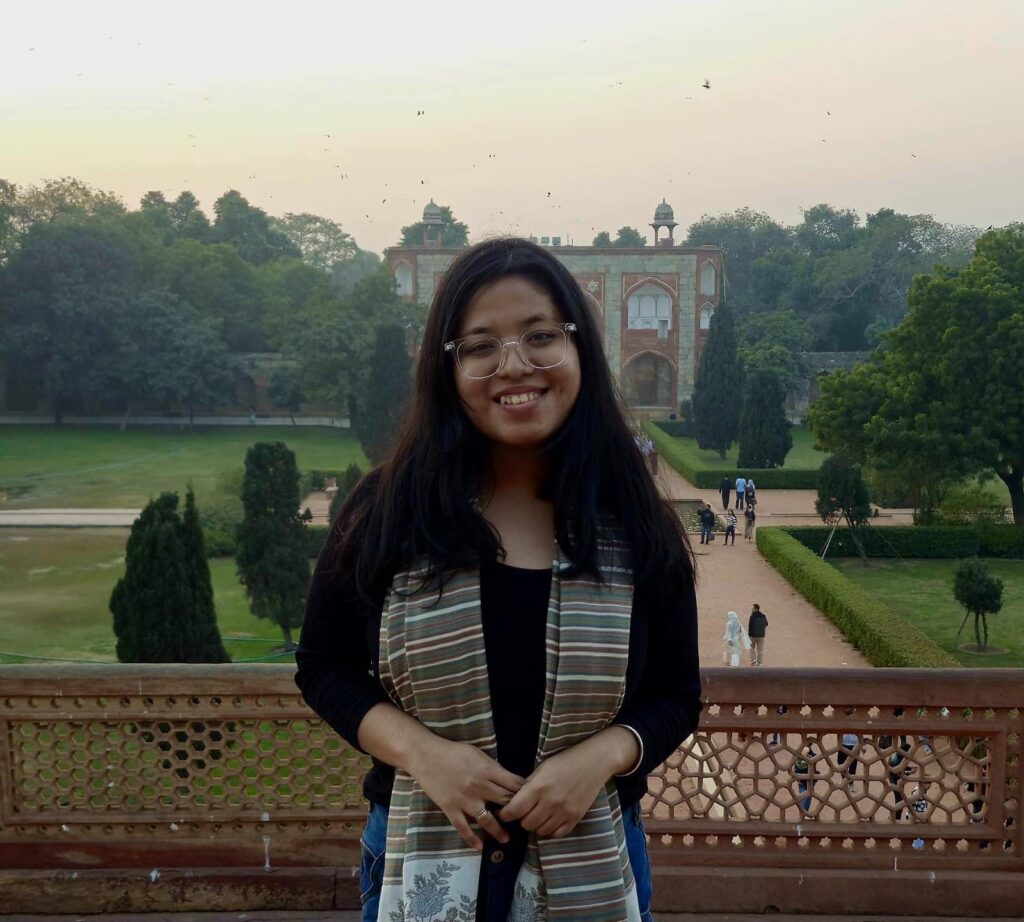
Darshayata Deka
Website Editor, DHARTI (July, 2026-Present)
Darshayata Deka is an English literature scholar and Digital Humanities practitioner from Assam, India, currently working as a Website Editor for DHARTI. She holds a BA (Hons.) in English from the University of Delhi and an MA in English Language and Literature from NIT Tiruchirappalli. Her academic interests lie at the intersection of Digital Humanities, Spatial Humanities, literature, and the cultural and literary histories of North-East India. As part of DHARTI’s communications and web initiatives, she contributes to the development and maintenance of the organisation’s digital presence.
Past Functionaries (2018-2024)
DHARTI’s work has been shaped by scholars and practitioners who have served in various roles across its previous Governing Bodies functional during 2018-2022 (formerly ‘Executive Boards’) and organisational teams. This section acknowledges the former functionaries whose contributions have helped build DHARTI’s academic, professional, and institutional foundations over the years.
Click on the following item-labels in order to expand/collapse them.
Dr. Nirmala Menon
President, DHARTI (2018-2022)
Professor, IIT Indore
Dr. Nirmala Menon is an Professor in the School of Humanities and Social Sciences (HSS), Discipline of English, IIT Indore. She is the Chair of the newly established Jaya Prakash Narayan National Centre of Excellence in the Humanities. She leads the Digital Humanities and Publishing Research Group at the Indian Institute of Technology (IIT), Indore, India. Menon is the author of Migrant Identities of Creole Cosmopolitans: Transcultural Narratives of Contemporary Postcoloniality (Peter Lang Publishing, Germany, 2014) and Remapping the Postcolonial Canon: Remap, Reimagine, Retranslate (Palgrave Macmillan, UK 2017). She is the Co-Editor of the first multilingual Volume of E-literature published from India (Ubiquity Press, 2023). She is Co-Editor of the forthcoming Learning by Practice: Digital Humanities Projects from India to be published by Routledge UK in 2023. Apart from the books, she has published more than 50 research papers in numerous international journals (Oxford University Press, Taylor and Francis, and Sage, among others), and speaks, writes and publishes about postcolonial studies, digital Humanities and scholarly publishing. She is the Project Director for Knowledge Sharing in Publishing (KSHIP), an Open-Access Publishing platform. Dr. Menon has received various national and international grants and awards ( MHRD, SPARC, UKEIRI, and Academia Europaea, among others). As Vice President of CenterNet (Consortium of Digital Humanities Research Groups, globally), Dr. Menon has put DH in India on the global map. She is also on the Advisory Board of the Open Library of Humanities (OLH); Advisory Board member of Ubiquity Press (UK); Advisory Board Member, Open Access India; and, Chair (2016-17) CLCS Global South Forum, Modern Language Association (MLA). Dr. Menon is one the founder-members and former President of Digital Humanities Alliance in Research and Teaching Innovations (DHARTI). She is an Editor of Digital Humanities Quarterly (DHQ) and Series Editor for Routledge Digital Scholarship Series, Digital Art and Humanities Series and DH in Asia series.
Dr. Ruchi Sharma
Treasurer, DHARTI (2022-Present)
Secretary, DHARTI (2018-2022)
Assistant Professor, Guru Nanak Dev University, Amritsar
Dr. Ruchi Sharma is an Assistant Professor in the Department of English at Guru Nanak Dev University, Amritsar, and has over a decade of experience teaching English language and literature at various universities. Her research and teaching interests span Soft Skills, Communication Skills, Body Language, Postcolonial Studies, Cultural Studies, Gender Studies, Star Studies, and Digital Humanities, with a particular interest in the impact of visual and textual literacy. Her doctoral research focuses on Indigenous writings in Aboriginal Australian literature, while her more recent work engages with Digital Humanities and its applications to teaching and literary studies. She has published research papers and book chapters in national and international publications and has presented her work at conferences and academic forums in India and abroad. She has also served as a resource person for courses and workshops on Digital Humanities and participated in the organisation of DHARTI2022, the organisation’s international conference on, “The Digital Divides: Discontents, Debates and Discussions”. Her contributions to literary studies and Digital Humanities have been recognised through awards including the Researcher of the Year Award from the IIS University and a Best Paper Award for her work on Digital Humanities.
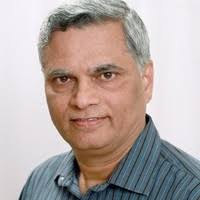
Dr. Ashok Thorat
Treasurer, DHARTI (2018-2022)
Founder-Director, Centre for Digital Humanities, Pune
Dr. Ashok Thorat served as the Treasurer of DHARTI from 2018 to 2022, during an important period in the organisation’s early development. A co-founder of DHARTI and the Centre for Digital Humanities, Pune, he has played a significant role in fostering Digital Humanities scholarship, teaching, and community-building in India. His work through CDH Pune has included developing DH courses and organising workshops and winter schools that have brought together scholars and educators from across the country. His longstanding engagement with DH and his involvement in the inaugural DHARTI conference in 2018 reflect his contribution to the growth of the organisation and the wider Indian DH community.
Dr. Arjun Ghosh
President, DHARTI (2022-Present)
Executive Board Member, DHARTI (2018-2022)
Professor, IIT Delhi
Dr. Arjun Ghosh is a Professor at IIT Delhi whose research interests include Digital Humanities, Performance Studies, and Technology in Society. He was formerly a Fellow at the Indian Institute of Advanced Study, Shimla, and is the author of A History of the Jana Natya Manch: Plays for the People and Freedom from Profit: Eschewing Copyright in Resistance Art, as well as an annotated translation of Bijon Bhattacharya’s Nabanna with a critical introduction. His wider research interests include Performance and Theatre Studies, Authorship, Copyright and Intellectual Property, Political Communication, and Science and Technology Studies. He is also actively involved in Digital Humanities research and teaching at IIT Delhi, including work on digital methods, humanities data, and the development of digital tools for humanities research.
Dr. Dibyadyuti Roy
Vice-President, DHARTI (2022-Present)
Executive Board Member, DHARTI (2018-2022)
Associate Professor, University of Leeds
With the experience of being a researcher and an educator in multidisciplinary academic environments across three different continents, Dibya’s work examines and interrogates cultural narratives of/about dominant technologies, ranging from nuclear weapons to artificial intelligence, with a current focus on algorithmically-driven platforms. His core interest(s) advance data-driven research and teaching interventions, particularly in Digital Media and Culture(s), which amplify and dialogue with non-normative and minority subjectivities as well as the interconnected structural inequities of race, caste, class and gender, especially from Majority World/Global South contexts. As a representative sample his recent work has engaged with issues of Algorithmic Accountability in the Global South(s), the role of social media health promotion during Covid 19 in India, and the performances of anxious postcolonial masculinity in online spaces. His continuing work in Digital Humanities, with a specific focus on India and South Asia, can be found in the volumes on “Global Debates in the Digital Humanities”, “What We Teach When We Teach DH” (both from the University of Minnesota Press), and “Digital Humanities and Laboratories” (from Routledge), to name a few. In addition he has edited the special issue of the journal “Reviews in DH” on DH pedagogies and is the current contributing author on “Digital Humanities” for the Oxford University Press Journal, “The Year’s Work in Critical and Cultural Theory” (YWCCT). Currently Dibya is the Programme Director, of the BA in Cultural and Media Studies at the University of Leeds and he has previously been a tenured faculty member at the Indian Institute of Management (IIM) Indore as well as at the Indian Institute of Technology (IIT) Jodhpur. He is also an affiliate of the Data and Society Research Institute (USA) and a founding member of DHARTI.
Dr. Shanmugapriya T.
Secretary, DHARTI (2022-Present)
Executive Board Member, DHARTI (2018-2022)
Assistant Professor, IIT (ISM) Dhanbad
Shanmugapriya is an Assistant Professor (Digital Humanities) in the Department of Humanities and Social Sciences, Indian Institute of Technology (Indian School of Mines) Dhanbad. She was a Postdoctoral Scholar at the Department of Historical and Cultural Studies, University of Toronto Scarborough, Canada from 2022 to 2024. She was an AHRC Postdoctoral Research Associate at Lancaster University, UK from 2020 to 2021. Shanmu was a SPARC Visiting Researcher at the Department of History, Lancaster University in 2019. Her research and teaching interests encompass an interdisciplinary approach, with a focus on digital humanities, digital environmental humanities, and digital literature. Specifically, her areas of expertise include South Asia, Colonial and Postcolonial studies, Text mining, Geographical text analysis, GIS and mapping, Interactive visualization, and Digital-born creative works. Shanmu earned her Ph.D. in Indian English Literature and Digital Humanities at Indian Institute of Technology Indore, India. She is one of the Interim Executive Committee members and Governing Body of DHARTI, and a Research Fellow and member of Electronic Literature Organization.
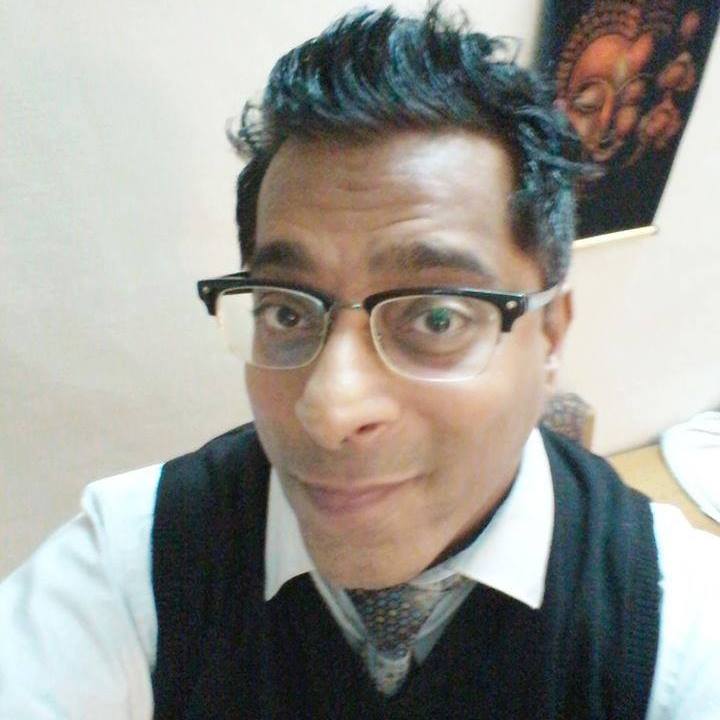
Dr. Rahul K. Gairola
Executive Board Member, DHARTI (2018-2022)
Researcher-Scholar
Dr. Rahul K. Gairola is a scholar, teacher-researcher, writer, and public intellectual whose work spans Digital Humanities, postcolonial studies, diaspora and migration, gender and sexuality studies, and comparative literature. He holds a joint doctorate in English and Comparative Literature, Film, and Media Studies from the University of Washington and has taught at universities across Australia, India, and the United States. His academic work brings together literary and cultural studies with digital media, questions of identity and belonging, and the cultural politics of technology. He previously served as an Advanced Assistant Professor of English and Comparative Literature at IIT Roorkee from 2015 to 2017 and is a member of several international Digital Humanities networks. He has authored and co-edited several books and continues to work across Digital Humanities, postcolonial and diasporic studies, and digital cultures.
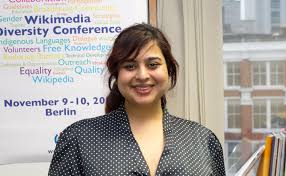
Padmini Ray Murray
Executive Board Member, DHARTI (2018-2022)
Founder-Direction, Design Beku, Bengaluru
Dr. Padmini Ray Murray served as a Governing Body Member of DHARTI from 2018 to 2022, contributing to the organisation’s early efforts to build a vibrant and locally grounded Digital Humanities community in India. A scholar, feminist researcher, maker, and digital humanities practitioner, she has been instrumental in developing conversations around Digital Humanities, critical making, design, technology, and questions of cultural and social justice. She established India’s first degree-level Digital Humanities programme at Srishti Institute of Art, Design and Technology, where she also served as course director from 2016 to 2018. She is currently the Founder-Director of Design Beku, a collective exploring decolonial, local, and ethical approaches to technology and design, and is a Research Fellow with the ESRC Digital Good Network.
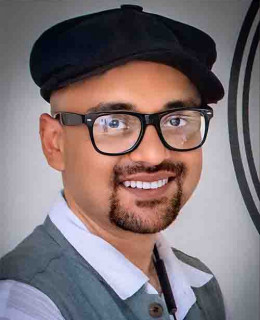
Dr. Siddartha Chakraborti
Executive Board Member, DHARTI (2018-2022)
Assistant Professor, Aligarh Muslim University
Dr. Siddhartha Chakraborti served as a Governing Body Member of DHARTI from 2018 to 2022 and has been closely associated with the organisation since its early years as one of its founding members. An Assistant Professor in the Department of English at Aligarh Muslim University, his academic work brings together postcolonial studies, Subaltern Studies, Digital Literatures, and gaming narratives. His research and teaching have also contributed to the development of Digital Humanities within English Studies, including pioneering courses on Digital Literatures at both undergraduate and postgraduate levels. Over the years, he has taught and conducted research at institutions including JNU, the University of Delhi, NMIMS, and IIT Jodhpur, while also contributing to international research and academic programmes.

Ravinder Singh
Executive Board Member, DHARTI (2018-2022)
Scholar-Researcher
Ravinder Singh served as a Governing Body Member of DHARTI from 2018 to 2022, contributing to the organisation’s early conversations around the possibilities and challenges of Digital Humanities in India. His work has been particularly attentive to questions of caste, representation, exclusion, and social justice within Digital Humanities, bringing important critical perspectives to a field often shaped by questions of technology and access. He presented his paper, Digital Humanities in India? A Few Preliminary Notes towards an Argument, at the 2018 Digital Humanities conference at IIM Indore, further engaging with the possibilities of developing a distinctly Indian Digital Humanities discourse. His work on Digital Humanities and caste has also been recognised by the Centre for Digital Humanities, Pune, as an important contribution to conversations around social justice and marginalised communities in the field.
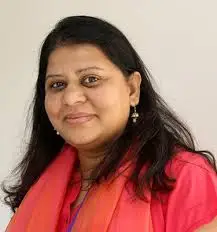
Dr. Maya Dodd
Executive Board Member, DHARTI (2018-2022)
Professor, FLAME University, Pune
Dr. Maya Dodd currently serves as the Director of the FLAME Centre for Legislative Education and Research at FLAME University in Pune, India. She received her Ph.D. from Stanford University and subsequent post-doctoral fellowships at Princeton University and JNU, India. She teaches Digital Cultures in the Department of Humanities and has pioneered teaching Digital Humanities (DH) in the liberal arts at the undergraduate level, and also supervises doctoral students for DH study in India. Through the Ownership of Public History in India grant from the British Academy, she has been exploring tools for cultural archiving via techniques from DH. She serves as an editor for the Routledge series on Digital Humanities in Asia. In collaboration, she is currently developing a new project on digitising Pune’s Architectural History from 1920-1980. She is also commissioning editor of the Digital Humanities in Asia series. She serves on the global advisory board of the University of Rochester’s Humanities in the World program and on the editorial boards of the journal, Public Humanities published by Cambridge University Press and the Edinburgh University Press IJHAC: A Journal of Digital Humanities. She is a founding director of the India-based Section-8 non-profit firm, Milli Archives Foundation. Since 2018, she has served to build digital humanities scholarship via the DHARTI collective, an ADHO constituent-member since 2023.
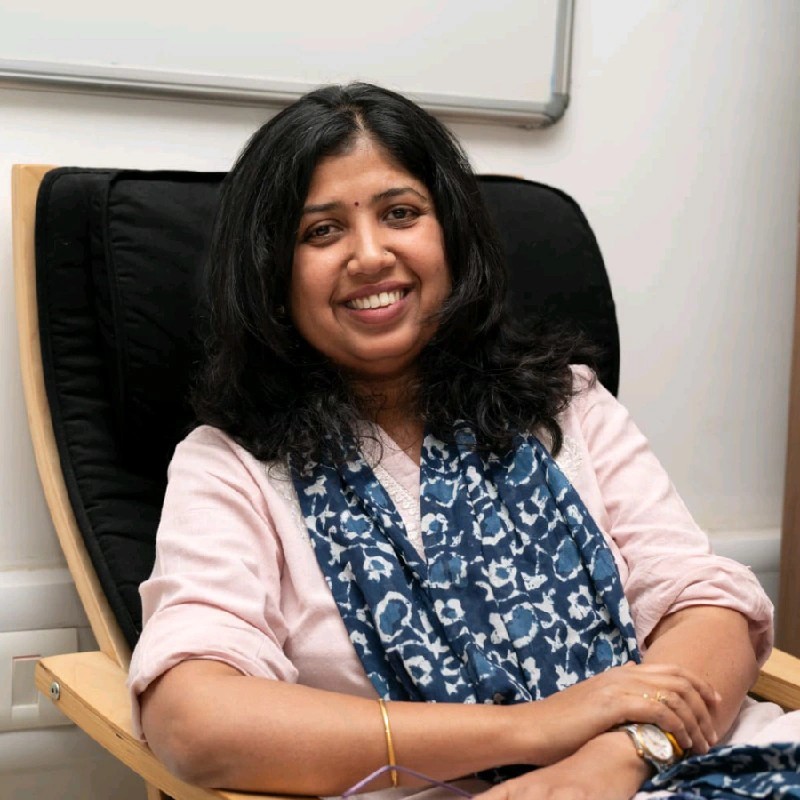
Dr. Annapurna Rath
Executive Board Member, DHARTI (2018-2022)
Associate Professor, IIT Gandhinagar
Dr. Arnapurna Rath served as a Governing Body Member of DHARTI from 2018 to 2022, contributing to the organisation during its formative years and to the development of Digital Humanities scholarship in India. She is currently an Associate Professor of Humanities and Social Sciences at IIT Gandhinagar, affiliated with the Discipline of Society and Culture. Her research interests include Digital Humanities, South Asian literature, and critical theories, bringing together literary and cultural studies with emerging digital approaches. She holds a PhD from IIT Bombay and has been actively involved in teaching and research at the intersection of literature, culture, and technology.

Dr. Jyothi Justin
Executive Board Member, DHARTI (2022-2025)
Post-Doctoral Fellow, Alliance University, Bengaluru
Dr. Jyothi Justin is a Post-Doctoral Fellow at Alliance University, Bengaluru. Previously, she was a doctoral scholar with the Digital Humanities and Publishing Research Group at IIT Indore, India. She hails from an English and Comparative Literature background. She completed her master’s on the same from Pondicherry University. Born and raised in a small coastal village in Kollam in Kerala, India, she is interested in exploring the intersections between literary works and digital media. She is particularly interested in using digital mapping tools for literary research. She has been using GIS for her research on female survivors of Dalit massacres in which she aims to utilize geospatial tools to give visibility to indigenous communities (especially Dalit women of India). Besides her interest in literature and films, Jyothi is also interested in gender studies and gender movements, especially feminism and queer studies. As a result, she is also interested in films and other visual narratives with similar themes. Jyothi has published on the topics Digital Cartography and Feminist Geocriticism, ecocriticism, Digital Humanities among others. She is an executive member of the Digital Humanities Alliance in Research and Teaching Innovation (DHARTI) and the peer-review editor at dhq. She is a HASTAC Scholar (2023-2025) and a CLS INFRA TNA fellow.
Together, these individuals represent the people who have shaped DHARTI’s journey so far. From the Governing Body and communications team to past functionaries and the wider community of members and collaborators, each has contributed to building DHARTI as a space for Digital Humanities research, teaching, and exchange. As the organisation continues to grow, so does the community that sustains and carries its work forward.